Concrete Retaining Wall Construction in Greeley, CO
A slope in the yard can wash out a flower bed or leave half the lot too steep to use. A concrete retaining wall in Greeley, CO holds that ground in place and turns uneven land into level space. Valencia Concrete builds poured concrete walls for sloped yards and for grade changes beside driveways and patios.
How Long Does It Take to Build a Concrete Retaining Wall?
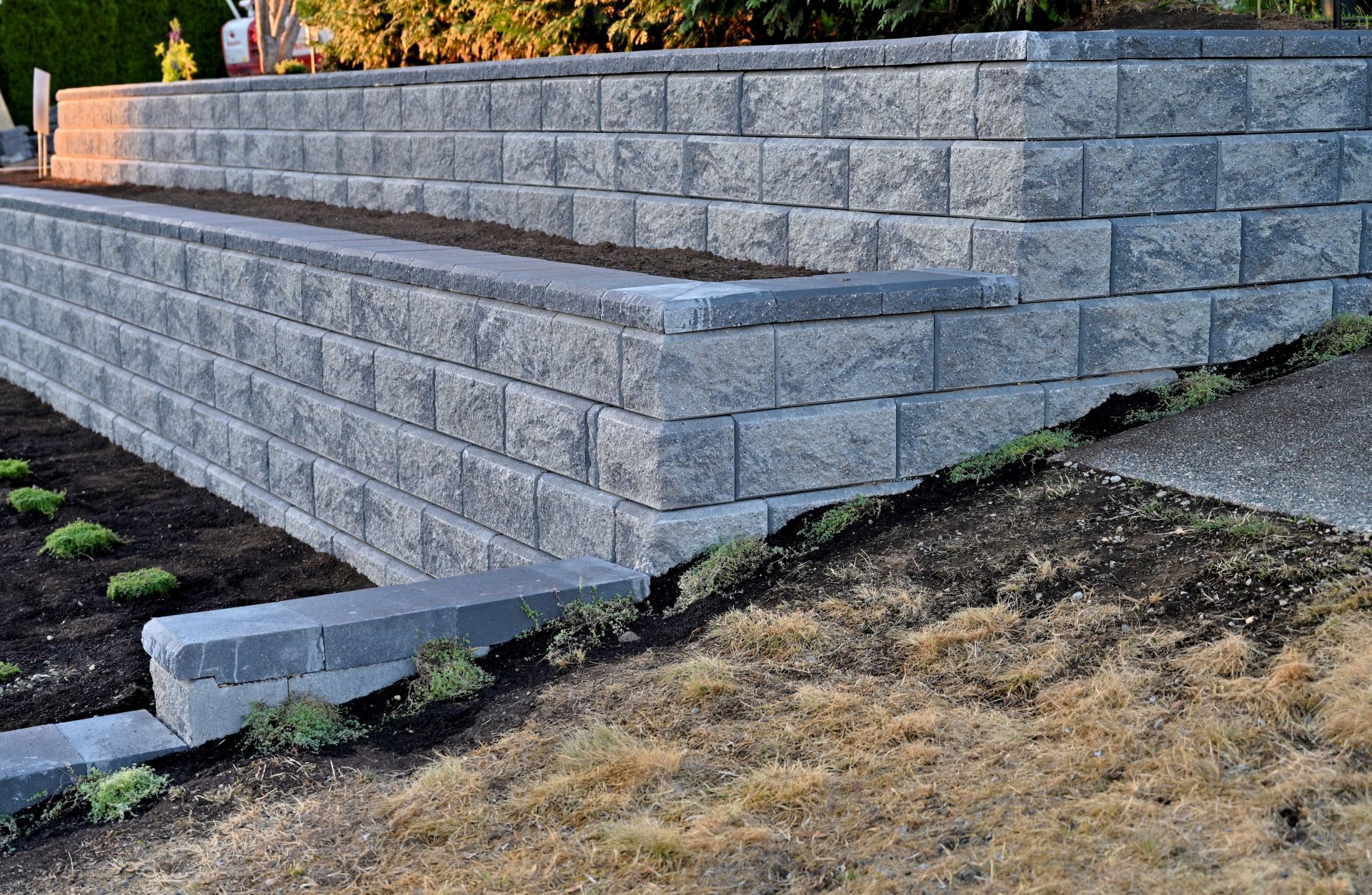
Most poured concrete retaining walls for a home take about one to two weeks from digging to backfill. The footing is poured first and needs a few days to gain strength. The wall forms go up on top of it, the wall is poured, and the forms usually come off after a few more days. Drainage and backfill come last, once the concrete can handle the pressure of the soil behind it. Taller or longer walls take more time, and cold snaps can slow curing.
How a Poured Wall Is Built
A retaining wall carries a constant load, so each stage of the build has a job to do.
The Footing
The footing is a wide concrete base below the wall. It spreads the weight into the ground and resists the soil trying to tip the wall forward. In this part of Colorado, footings should sit below the frost line so freezing ground doesn't lift them.
The Wall
Forms are set on the footing and the wall is poured as one solid piece. Steel reinforcing bar inside the concrete helps it handle the bending force from the soil. Because it's cast in place, a poured wall can follow a curve or step down a hillside.
Drainage and Backfill
Water is the biggest threat to any retaining wall. A perforated drain pipe at the base, surrounded by gravel, carries water away instead of letting it build up behind the wall. The rest of the space is backfilled and compacted in layers.
Where a Concrete Retaining Wall Helps in Greeley
Sloped yards are the most common reason to build one. A wall at the base of a hill can create a flat lawn or a level spot for a
concrete patio that wasn't possible before. Landscape retaining walls also frame raised beds for gardens and shrubs, keeping soil and mulch where they belong. Grade changes along a driveway or front walk are another fit. When the ground beside a path keeps sliding onto it, a low wall stops the creep. Pairing the wall with new
concrete sidewalks lets the two be planned at the right heights.
What Valencia Concrete Brings to the Job
Valencia Concrete works out of Greeley, and a retaining wall is rarely a standalone job. It often ties into other flatwork on the same property, so we look at the whole slope before deciding where the wall should go. To see our other services, visit the
Valencia Concrete home page.
Retaining Walls Near Greeley
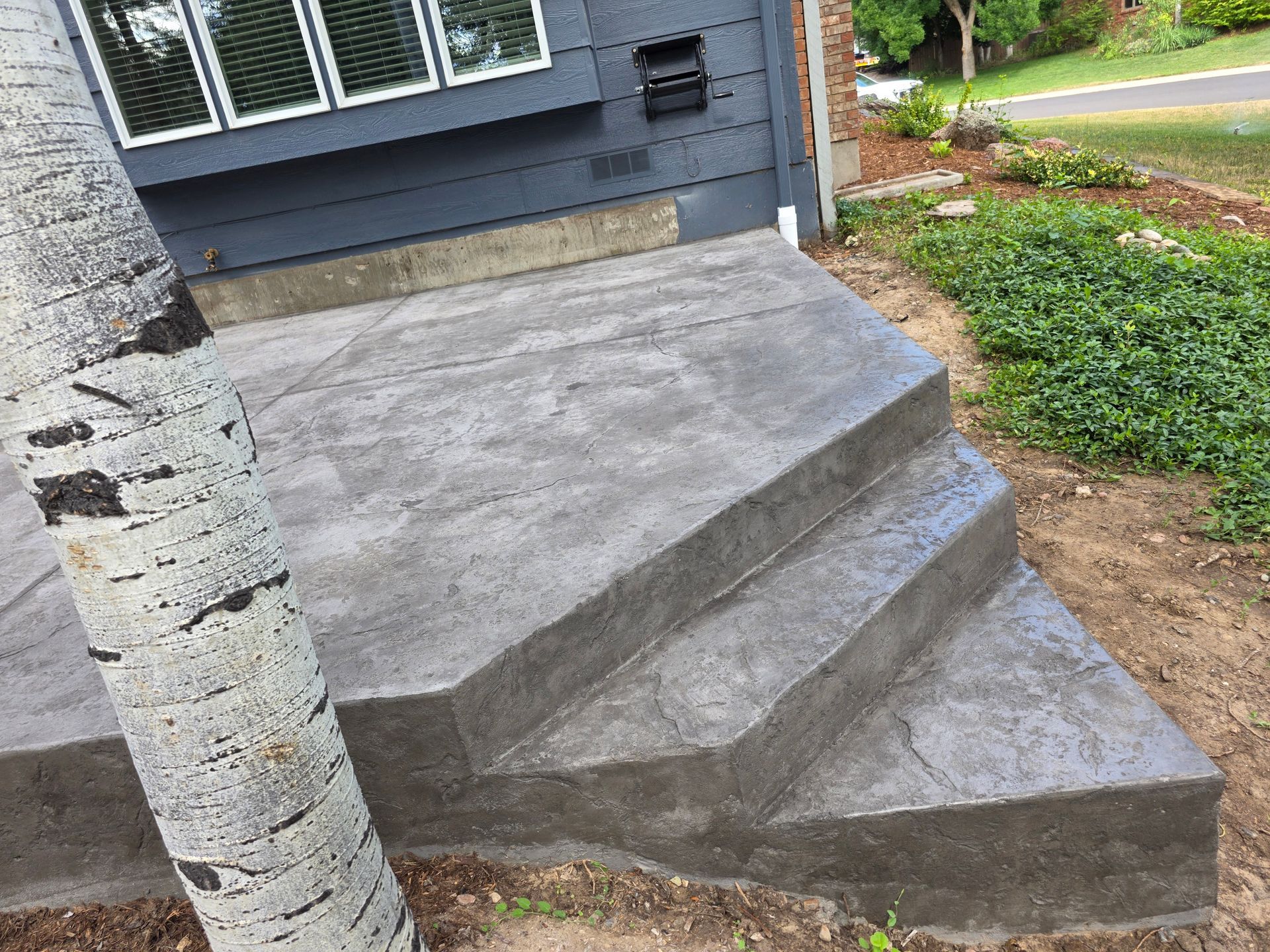
Valencia Concrete is located in Greeley. If your property is in Evans, Eaton, Kersey, or Severance, those towns are close by, so call (970) 515-9798 and tell us about the slope you're dealing with.
Retaining Wall FAQ
Why does a retaining wall need drainage?
Wet soil is much heavier than dry soil, and trapped water pushes hard against the back of the wall. Over time, that pressure can make a wall lean or crack. A gravel layer and a drain pipe at the base let water escape before it builds up.
Do I need a permit for a retaining wall?
It depends on the height. Many building codes require a permit, and often an engineer's design, for walls over 4 feet tall measured from the bottom of the footing. Walls that hold up a driveway or a structure may need one at any height, so check with the City of Greeley before work starts.
Is a poured wall better than a block wall?
Each has its place. A poured concrete wall is one reinforced piece, which makes it a strong choice for taller walls and for holding back heavy loads. Block walls are built from individual units and suit shorter garden borders.
Can a concrete retaining wall look decorative?
Yes. Form liners can press a stone or wood grain texture into the face during the pour. The wall can also be stained or colored to match nearby patios and walks.
What makes a retaining wall lean?
The usual causes are poor drainage, a footing that's too small, and frost heave under a shallow base. Once a wall starts to lean, the movement tends to get worse with each wet season and freeze.
Level Out Your Yard
If part of your yard is too steep to use, a wall can change that. Call Valencia Concrete at (970) 515-9798 or send a request with a photo of the slope, and we'll talk about the wall it needs.